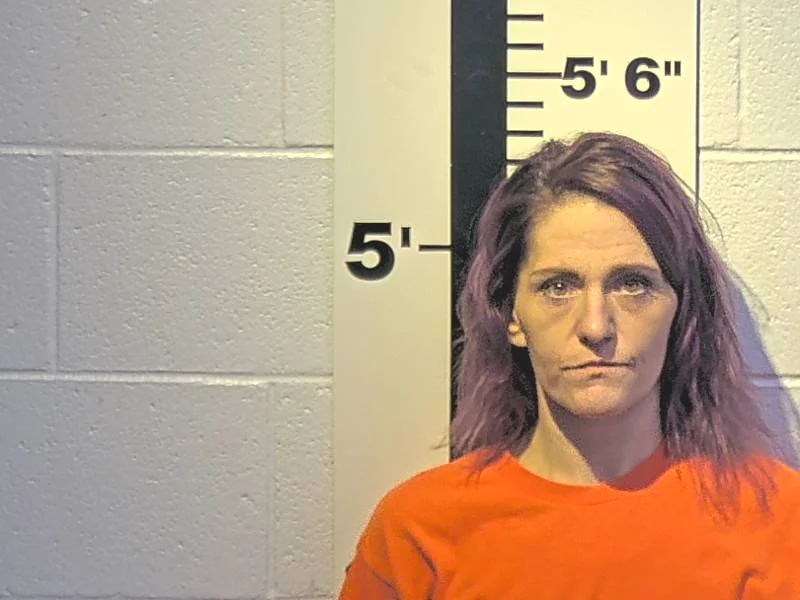
A misdemeanor charge for misusing vehicle registration evidence landed Jackie Jarnigan in the Claiborne County Jail Friday as part of a broader investigation that swept up five suspects on charges ranging from public intoxication to alleged drug manufacturing.
Jarnigan faces one count of misuse of evidences of registration under Tennessee Code Annotated § 55-4-101, a violation that typically involves improper display, alteration, or fraudulent use of vehicle registration documents.
The charge carries potential penalties including fines and possible jail time, though it represents the least severe allegation among the five co-defendants arrested in what appears to be a coordinated law enforcement operation.
Booking records show Jarnigan was processed into custody alongside four other suspects: Jamey Helton and Lisa Berry, both charged with public intoxication; Christy Scott, facing the most serious allegation of drug manufacturing, delivery, or sale; and Andrea Brown, whose specific charges were not detailed in available records.
The presence of a drug manufacturing charge among the co-defendants suggests the registration violation may have emerged during a larger narcotics investigation. Traffic stops and vehicle searches often uncover registration irregularities when officers are pursuing more serious drug-related crimes.
Registration violations under Tennessee law encompass various offenses, from displaying expired or fraudulent tags to using registration documents belonging to another vehicle. The specific nature of Jarnigan's alleged violation was not detailed in booking records.
Claiborne County, located in northeastern Tennessee along the Kentucky border, has seen its share of drug-related investigations in recent years as law enforcement agencies work to combat the flow of controlled substances through rural communities.

This marks Jarnigan's second booking in the county jail system, according to records. The previous arrest occurred in Claiborne County as well, though details of that earlier incident were not immediately available.
The coordinated nature of Friday's arrests suggests investigators may have been monitoring the suspects as part of an ongoing operation. Drug manufacturing cases often involve extended surveillance and the use of informants to build evidence before arrests are made.
Christy Scott's drug manufacturing charge represents the most serious allegation in the group, as Tennessee treats the production and distribution of controlled substances as felony offenses carrying significant prison time upon conviction.
Public intoxication charges against Helton and Berry indicate the arrests may have occurred in a public setting where the suspects' condition drew law enforcement attention. Such charges often accompany more serious allegations when suspects are found under the influence during police operations.

The timing of the arrests on a Friday evening is typical for drug-related operations, as law enforcement agencies often execute search warrants and make arrests when suspects are most likely to be present at target locations.
Vehicle registration violations, while seemingly minor, can provide law enforcement with legal grounds to detain suspects and conduct searches that uncover more serious criminal activity. Courts have consistently upheld the authority of police to investigate registration discrepancies during traffic stops.
Claiborne County's location along major transportation routes connecting Tennessee to Kentucky makes it a corridor for drug trafficking operations. The county's rural setting also provides cover for clandestine drug manufacturing activities.
Friday's booking activity stands out in what has been a relatively quiet period for the county jail, with no other arrests recorded for the day according to booking data.
The investigation appears to have targeted multiple suspects simultaneously, a strategy law enforcement uses to prevent co-defendants from destroying evidence or fleeing once arrests begin.
Registration fraud cases can involve organized schemes where criminals use false or stolen documents to avoid detection while transporting illegal substances. The documents may be counterfeited, belong to other individuals, or be expired registrations used to avoid triggering database alerts during routine traffic stops.
Tennessee's vehicle registration laws require proper documentation to be displayed and available for inspection by law enforcement. Violations can result in immediate citations and, in cases involving fraud or forgery, criminal charges carrying fines and potential incarceration.
The Claiborne County Sheriff's Office has not released additional details about the investigation that led to the five arrests, though the diverse nature of the charges suggests a complex operation involving multiple criminal activities.
Jarnigan and the co-defendants now face the judicial process as their cases work through the county court system. The registration violation charge, while less severe than the drug allegations faced by Scott, still carries legal consequences that could impact driving privileges and result in financial penalties.